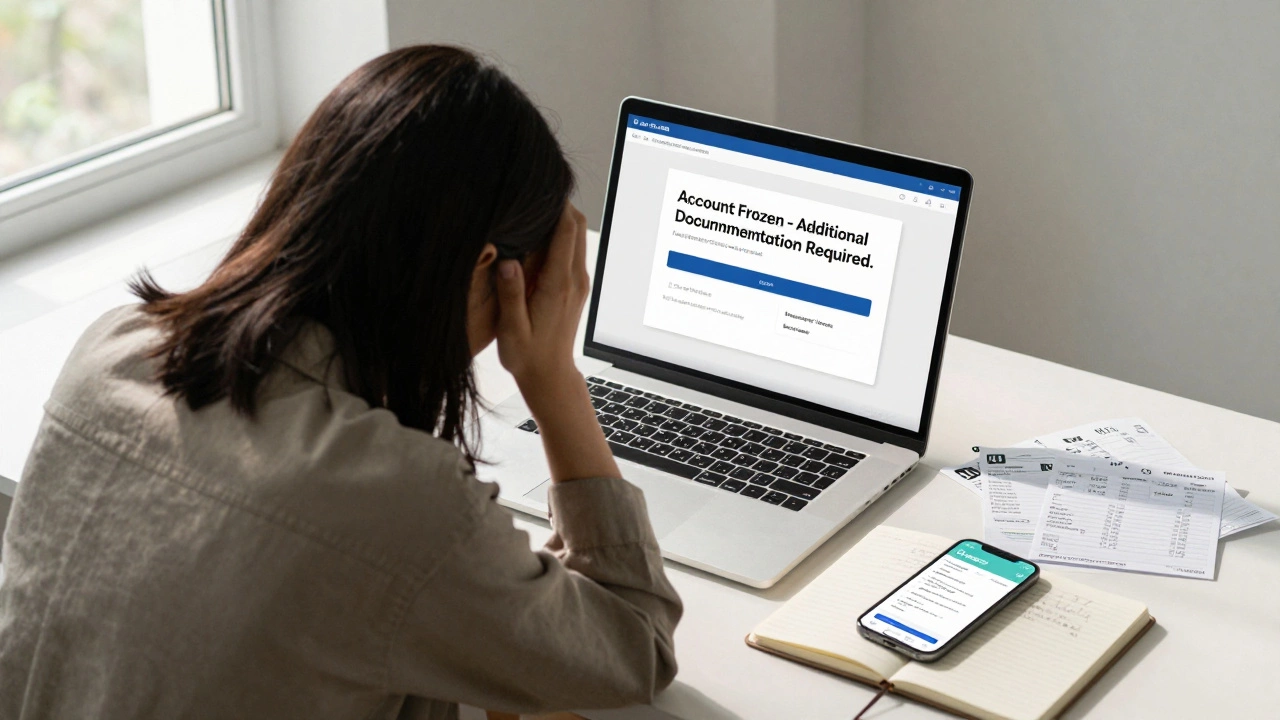
Bank accounts freezing without warning is one of those nightmares that hits when you least expect it. It’s not just about being locked out of your money-it’s about missed rent payments, canceled subscriptions, or worse, payroll delays if you run a small business. And right now, with global financial systems under more scrutiny than ever, even honest, law-abiding people are getting caught in the net. You didn’t do anything wrong. But your transaction history looked suspicious. Maybe you paid a freelancer overseas. Maybe you used a new payment app. Or maybe you just happened to make a large purchase around the same time someone else flagged their account for fraud. The system doesn’t care about context. It sees patterns, and it reacts.
One woman in Sydney lost access to her business account after paying a graphic designer in Poland. She had no idea the designer’s PayPal account had been compromised. Her bank flagged the transfer as high-risk. By the time she got her funds back, she’d lost two clients because she couldn’t pay them on time. This isn’t rare. In 2024, over 1.2 million Australian accounts were temporarily frozen due to automated fraud detection systems. And while most are restored within days, the damage-lost trust, missed opportunities, stress-stays longer.
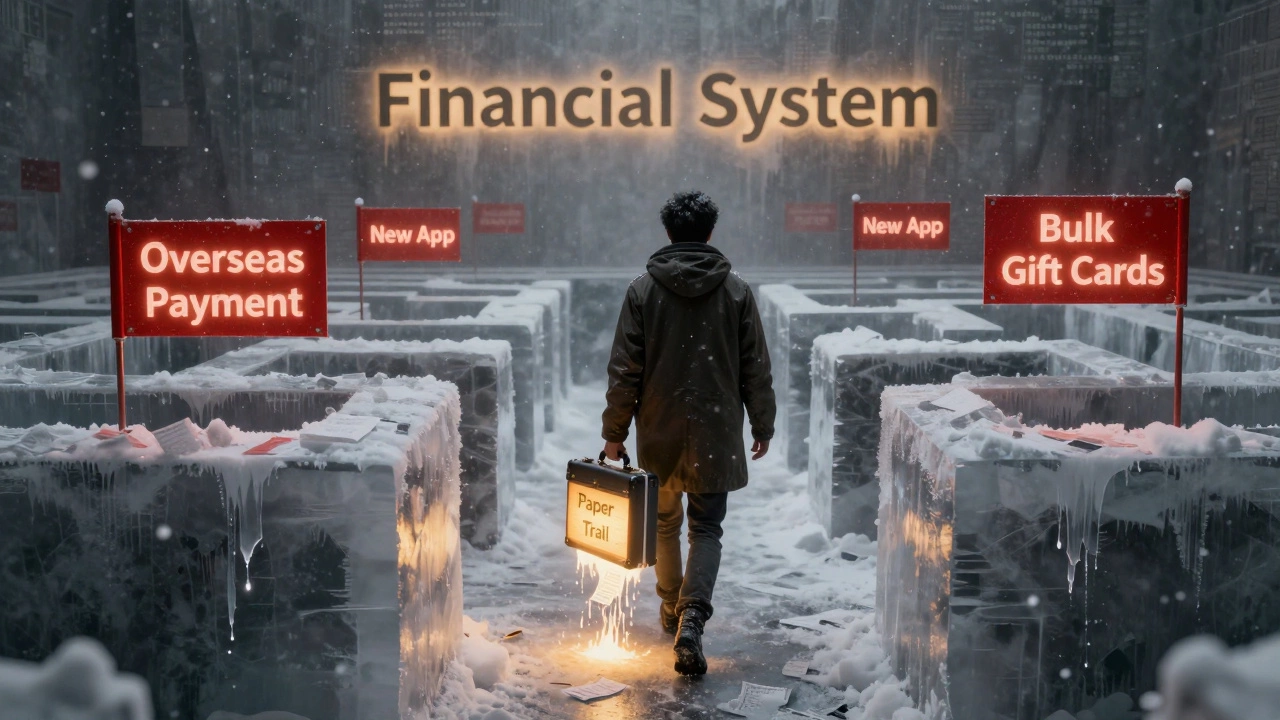
Here’s the thing: banks don’t freeze accounts because they hate you. They do it because they’re forced to. Anti-money laundering laws require them to report anything that looks odd. And their software? It’s not smart. It’s not intuitive. It just flags anything that breaks a rule. So if you’ve ever paid an excorte paris service in France, or sent money to a digital nomad in Bali, or even bought gift cards online in bulk-you’re already on the edge of their radar.
Know What Triggers a Freeze
Most freezes happen because of one of five triggers:
- Unusual transaction volume (e.g., $5,000 suddenly goes out when your average is $200)
- Transactions to high-risk countries (even if they’re legal)
- Payments to new or unverified recipients
- Multiple failed login attempts or changes to account details
- Using the same device or IP address across multiple accounts
Let’s say you run a freelance design business. You’ve been paid through PayPal for years. Then you switch to Wise because the fees are lower. Boom. Your bank sees a new payment processor, unfamiliar recipient names, and suddenly your account is under review. It’s not fraud. It’s just noise in the system.
And here’s the kicker: some of these triggers are things you can’t control. Like if your phone gets stolen and someone tries to log into your account five times. Or if your neighbor uses the same Wi-Fi and accidentally triggers a login alert. Banks don’t ask questions. They lock first, ask later.
Build a Paper Trail That Works for You
The best defense is a clear, organized record of every transaction. Not just screenshots. Real documentation. For every payment you make:
- Save the invoice or receipt
- Keep the communication with the recipient (email, chat logs)
- Write a one-line note in your spreadsheet: “Payment to Maria K. for logo design, Dec 3, 2025”
When your bank calls and says, “Why did you send $3,000 to this person?”, you don’t want to say, “Uh… I think she was a freelancer?” You want to say, “Here’s the contract, the invoice, and our email thread confirming the scope of work.”
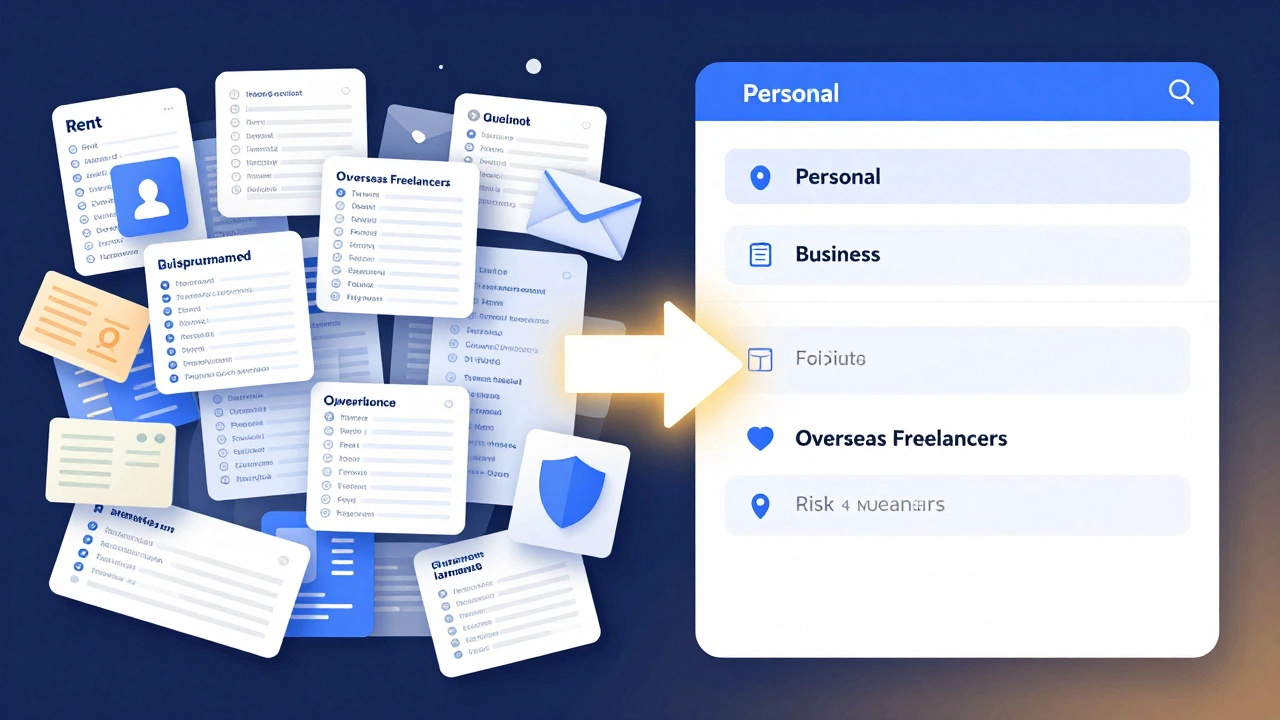
Some people use apps like Notion or Airtable to log every transaction with tags: “business,” “personal,” “overseas,” “recurring.” It takes five minutes a week. But when your account gets flagged, those five minutes save you three days of stress.
Don’t Use the Same Payment Methods Everywhere
Using the same bank account to pay your rent, your Uber, your Amazon Prime, and your freelance clients? That’s asking for trouble. Banks look for patterns. If you’re using one account for everything, they see it as a “central hub”-and hubs are targets.
Here’s what works better:
- Separate your personal and business money-even if you’re a solo freelancer
- Use a different card for subscriptions vs. one-time purchases
- Keep a low-balance backup account for risky payments (like crypto or international freelancers)
One Melbourne-based photographer started using a second bank account just for paying overseas models and stylists. He didn’t change his behavior. He just changed his tools. His main account has never been flagged since.
Know Your Bank’s Rules-And How to Talk to Them
Most people think, “I’ll just call customer service if something goes wrong.” But customer service reps don’t have the power to unfreeze accounts. They just pass your case to a compliance team. And that team? They work in silence. They don’t call you back unless you’ve sent them the right documents.
Before you even get flagged, find out:
- What’s your bank’s fraud hotline? (It’s not the main number)
- Do they require a signed affidavit? A notarized letter?
- What’s the average turnaround time for unfreezing?
Some banks take 72 hours. Others take two weeks. If you’re running a business, you need to know this in advance. Write it down. Put it in your phone. Don’t wait until your rent is due.
Watch Out for Third-Party Services That Hide Your Activity
Apps like Revolut, Wise, or even PayPal can make it look like your money is moving in clean, simple ways. But behind the scenes, they’re routing payments through multiple intermediaries. Your bank sees a payment from “Wise Payments Ltd” and doesn’t know if it’s a legitimate business or a shell company.
One user in Brisbane had her account frozen because she used PayPal to pay a virtual assistant in the Philippines. PayPal showed the payment as coming from “PayPal User #48291.” Her bank saw that as a high-risk, anonymous transfer. She had to send 17 pages of documentation just to get her account back.
Always check: does the recipient’s name appear on your bank statement? Or does it say “Third-Party Processor”? If it’s the latter, you’re playing with fire.
What to Do If Your Account Is Already Frozen
If it’s already happened, here’s your step-by-step:
- Don’t panic. Don’t call repeatedly. It slows things down.
- Log in to your online banking. Look for a notice or message. It usually says “Account Under Review” or “Additional Documentation Required.”
- Download your transaction history for the last 90 days.
- Identify the suspicious transaction. Was it to a new person? A new country? A new service?
- Gather proof: invoices, emails, screenshots, contracts.
- Send it all via secure upload-not email. Most banks have a portal for this.
- Follow up in 48 hours. If you hear nothing, ask for a case number and escalate to the compliance team.
People who follow this process get their accounts back in under 72 hours. Those who wait or ignore it? They’re stuck for weeks.
Stay Ahead of the Curve
Financial systems are getting stricter. AI tools are learning faster. What was fine last year might get flagged this month. The key isn’t to stop doing business. It’s to do it smarter.
Start small. Pick one habit: start logging payments. Open a separate account for international transfers. Keep receipts. These aren’t fancy tricks. They’re basic hygiene.
And if you’re ever unsure-ask. Call your bank. Ask them, “What kinds of transactions trigger reviews?” Most won’t tell you. But some will. And that one person who gives you a real answer? They’re worth their weight in gold.
There’s no magic shield against account freezes. But there’s a clear path to reducing your risk. It’s not about being perfect. It’s about being predictable. And in a world run by algorithms, predictability is your superpower.
By the way, if you’ve ever used a service like escort girl pris or scorts paris, you might’ve noticed how quickly those payments get flagged. It’s not because they’re illegal-it’s because they’re opaque. Banks don’t like anything that doesn’t have a clear paper trail. And that’s the lesson here: if you can’t explain it in plain English, the system will assume the worst.