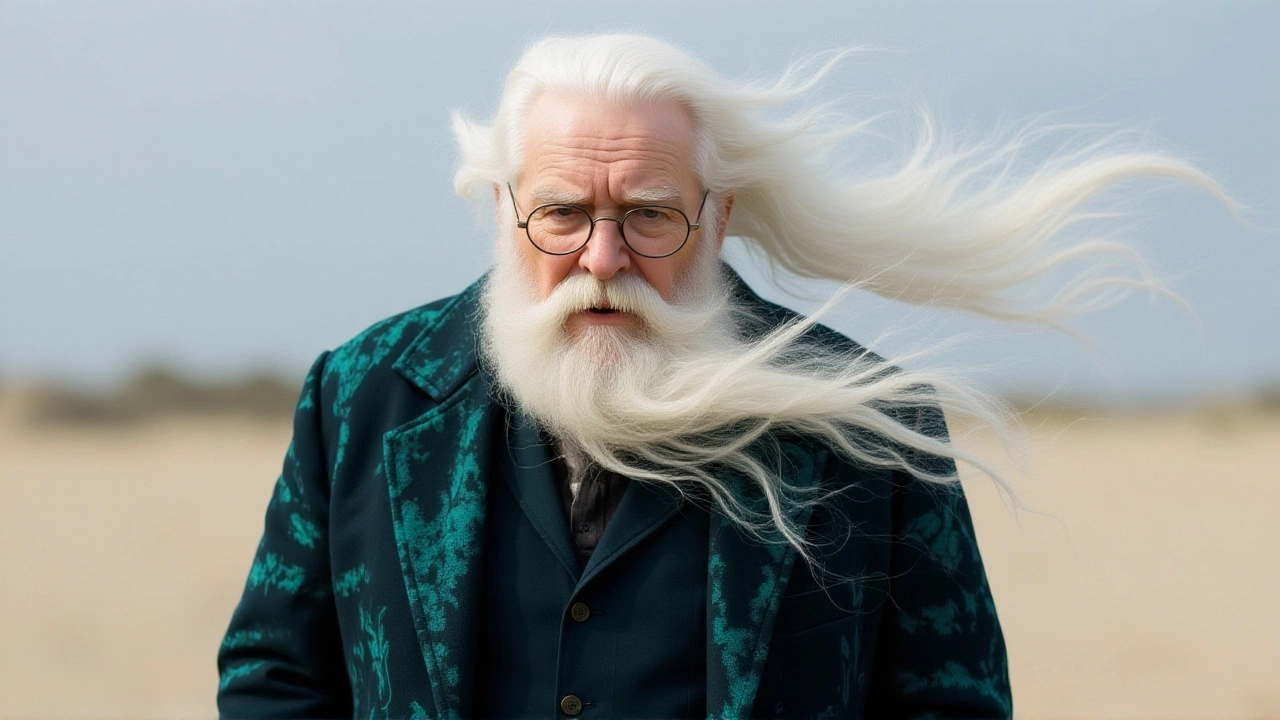
Dumbledore: The Wizard Who Shapes Stories
When talking about Dumbledore, the venerable headmaster of Hogwarts who guides young witches and wizards. Also known as Albus Percival Wulfric Brian Dumbledore, he stands as a symbol of wisdom, leadership and sacrifice. Harry Potter, the boy who lived, benefits directly from Dumbledore’s mentorship, showing how mentorship (Subject) nurtures (Predicate) heroic growth (Object).
Wizardry, the art of magic, demands deep knowledge and moral balance. This connection (Subject‑Predicate‑Object) mirrors real‑world stories where expertise drives outcomes, like a music legend hinting at a future tour or a record‑breaking Crocs collector using fame for social good. Both cases reflect that magic isn’t just spells; it’s influence, strategy, and community impact.
Why Dumbledore’s Themes Resonate in Today’s News
Every article in this collection carries a thread of leadership or surprise—whether Liam Gallagher teasing a 2026 Oasis tour, a Bangkok sinkhole reshaping urban safety plans, or Peyton Manning eyeing a post‑football career. Those moments echo Dumbledore’s lesson that unexpected challenges spark growth. The central idea (Subject) of ‘leadership’ (Predicate) shapes (Object) diverse fields, from sports to infrastructure.
Mentorship, another core attribute of Dumbledore, appears when a record‑holder turns personal passion into a platform for foster‑care awareness, or when a former athlete considers broadcasting to guide fans. The pattern repeats: experienced figures (Subject) share knowledge (Predicate) that fuels community progress (Object). This reinforces the semantic triple linking Dumbledore’s mentorship to real‑world influence.
Even the notion of magical realism—where extraordinary events sit beside everyday life—shows up in stories about a massive sinkhole swallowing vehicles or a record‑breaking Crocs collection. The juxtaposition (Subject) of the surreal (Predicate) within the mundane (Object) is a hallmark of Dumbledore’s world, reminding us that wonder can coexist with facts.
Below you’ll find a curated mix of posts that capture these ideas: bold moves in music, daring feats in sport, startling events in cities, and heartfelt community projects. As you scroll, notice how each piece, like a chapter in a wizard’s tale, reflects the same principles Dumbledore champions—leadership, mentorship, and a touch of magic. Let these stories inspire your own journey, just as Dumbledore’s guidance sparks adventure for every reader.